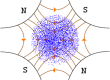
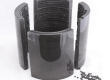
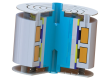
Halbach arrays are widely known for controlling how magnetic flux is distributed through a specific arrangement of magnetization directions. The same principle can also be extended to cylindrical structures that generate dipole, quadrupole, sextupole, octupole, and other multipole field distributions.
These Halbach multipoles are distinguished by the spatial order of the magnetic field they generate, rather than simply by the number of permanent magnet segments used in the assembly. Understanding this distinction provides a useful basis for comparing different multipole configurations and for examining how increasingly higher-order magnetic field distributions are created in practical permanent magnet systems.
What Halbach Multipoles Actually Describe?
The terms dipole, quadrupole, sextupole, and octupole describe the spatial order of magnetic fields rather than particular permanent magnet shapes or assembly methods.
In Halbach multipoles, magnetization directions are arranged so that the resulting magnetic fields follow specific multipole distributions. Different numbers of permanent magnet segments can approximate the same multipole field order when their magnetization directions follow the required spatial distribution.
This terminology is broader than the way “multipole magnets” is sometimes used in the permanent magnet industry. Multipole-magnetized rings or discs usually refer to permanent magnet components containing multiple north and south poles. By contrast, Halbach multipoles are better understood as magnetic field configurations created through controlled magnetization arrangements.
Dipole, quadrupole, sextupole, and higher-order fields can also be produced by electromagnets, superconducting magnets, or iron-dominated magnetic circuits. Halbach structures represent one permanent-magnet approach to generating these field distributions.
How Multipole Order Changes the Magnetic Field Distribution?
The spatial behavior of multipole fields changes systematically with multipole order. For ideal two-dimensional internal multipole fields, the magnetic flux density follows the general relationship:
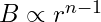
where r is the radial distance from the field center and n represents the multipole order. Dipoles correspond to n=1, quadrupoles to n=2, sextupoles to n=3, with progressively higher powers of position appearing as the multipole order increases.
Two cases are particularly important. Dipolar fields produce approximately homogeneous magnetic fields, while quadrupolar fields produce approximately homogeneous magnetic field gradients. Sextupoles and higher-order multipoles introduce progressively higher-order spatial variations.
| Multipole | Pole Count | Multipole Order | Ideal Field Dependence | Spatial Behavior |
|---|---|---|---|---|
| Dipole | 2 | 1 |  |
Homogeneous field |
| Quadrupole | 4 | 2 |  |
Homogeneous field gradient |
| Sextupole | 6 | 3 |  |
Quadratic field variation |
| Octupole | 8 | 4 |  |
Cubic field variation |
| Decapole | 10 | 5 |  |
Fourth-order field variation |
| Dodecapole | 12 | 6 |  |
Fifth-order field variation |
The progression from dipoles to higher-order multipoles therefore represents more than an increase in pole count. Each multipole order produces a different mathematical dependence of the magnetic field on position.
For quadrupoles, the linear field variation means that the first spatial derivative remains approximately constant within the ideal working region. For sextupoles, octupoles, and higher-order fields, the first-order gradient itself varies with position, producing increasingly nonlinear field distributions.
Halbach Dipoles: Approximately Homogeneous Fields
Halbach dipoles represent the lowest-order multipole configuration considered here. For ideal two-dimensional internal fields, the magnetic flux density is approximately independent of radial position:
This means the magnetic field remains nearly constant across the central field region rather than increasing with distance from the field center.
In this sense, dipolar Halbach fields can be used to create approximately homogeneous magnetic fields, where the field strength changes only slightly across the intended working region.
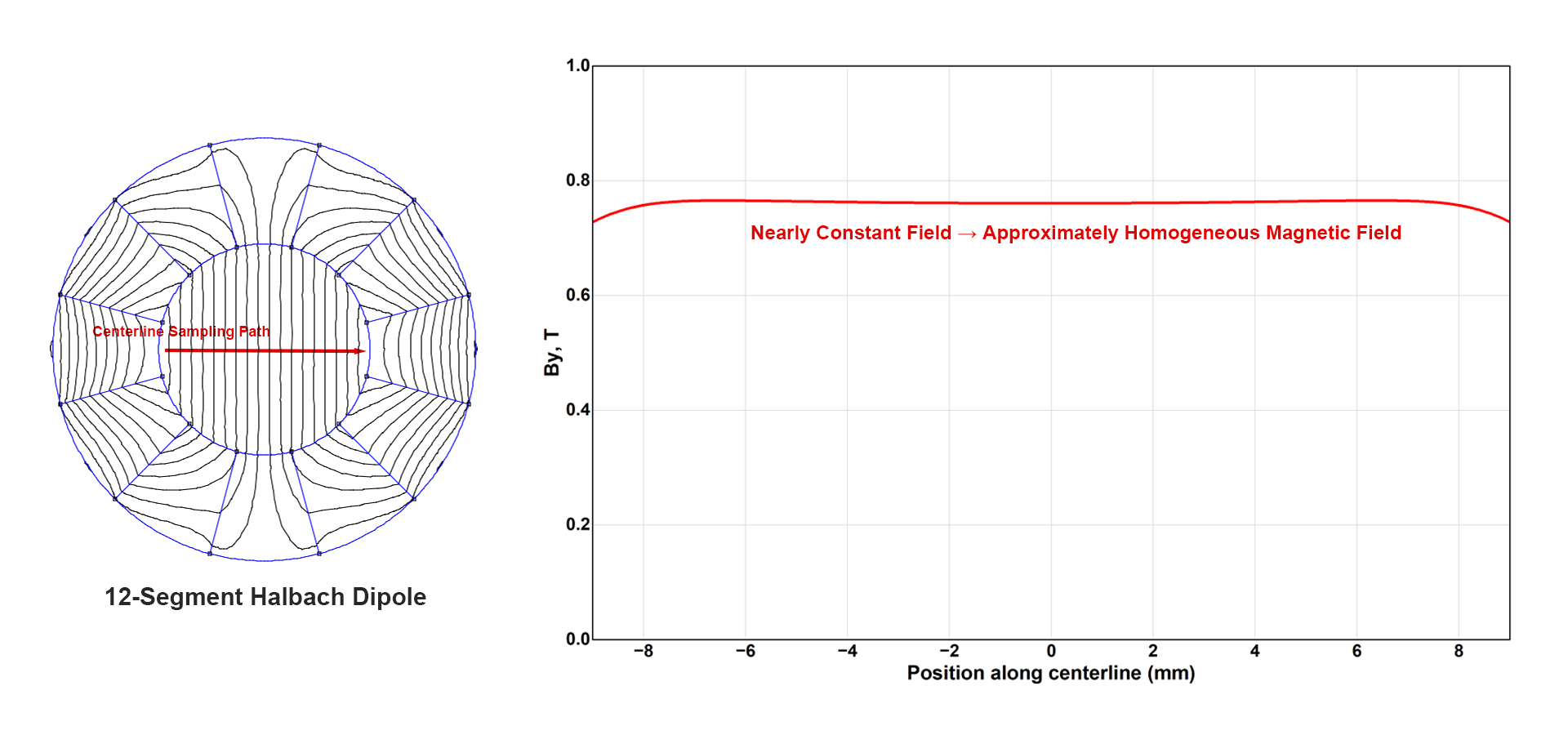
The result comes from the spatial arrangement of magnetization directions around the cylindrical structure. The magnetization pattern combines to produce an approximately uniform transverse field within the internal working region.
Halbach Quadrupoles: Approximately Homogeneous Magnetic Field Gradients
Halbach quadrupoles represent the next multipole order after dipoles. For ideal two-dimensional internal fields, the magnetic flux density increases approximately linearly with radial distance from the field center:

This means the magnetic field changes at a nearly constant rate across the central field region.
In this sense, quadrupolar Halbach fields can be used to create approximately homogeneous magnetic field gradients, where field strength changes predictably with position.
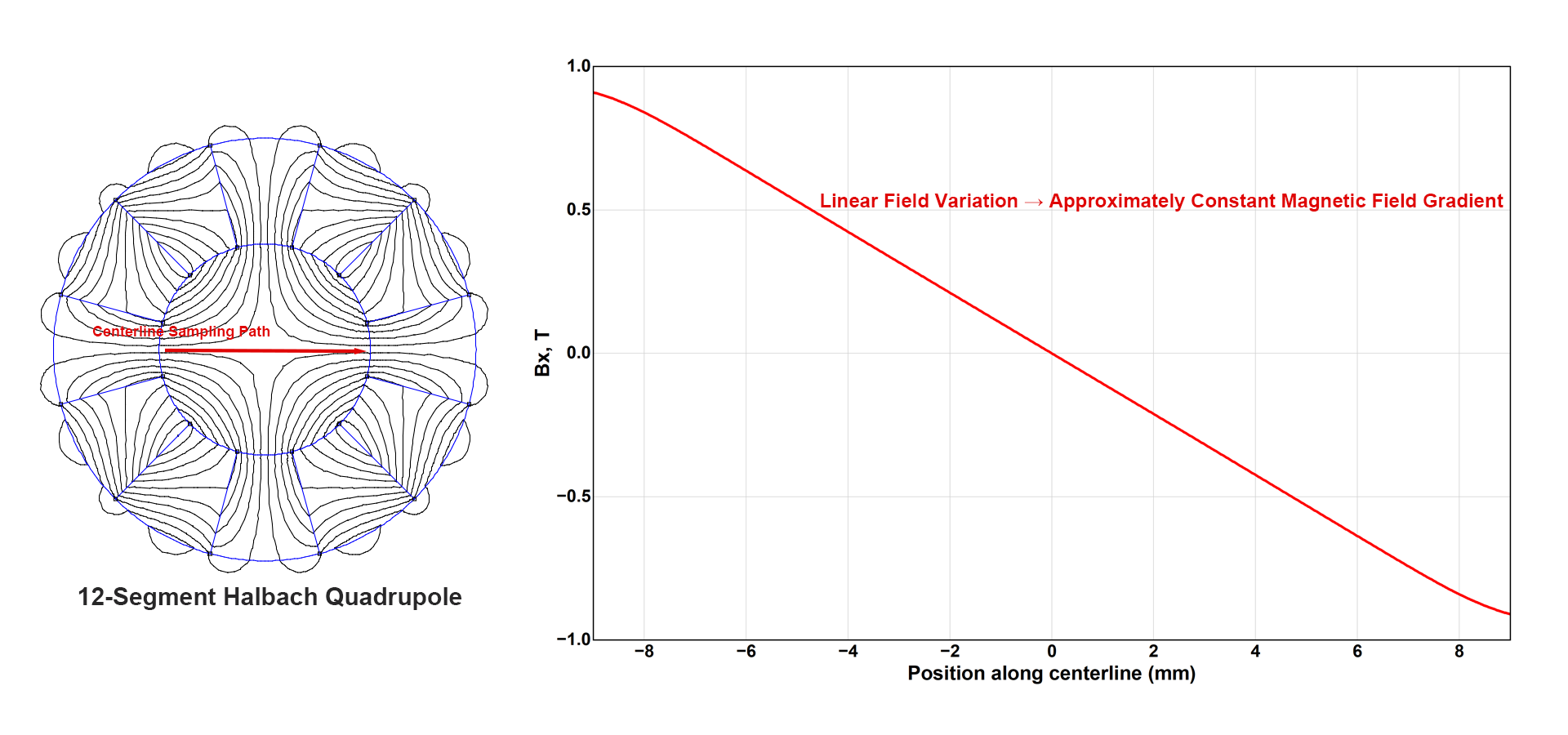
The result comes from the spatial arrangement of magnetization directions around the cylindrical structure. Rather than maintaining a nearly constant internal field as in dipoles, the magnetization pattern combines to produce controlled linear field variation across the internal working region.
Halbach Sextupoles, Octupoles, and Higher-Order Field Distributions
Halbach sextupoles and octupoles extend the same multipole principle to higher spatial orders. For ideal two-dimensional internal fields, their magnetic flux density varies according to progressively higher powers of radial position:
for sextupoles, and:
for octupoles.
This means the magnetic field no longer changes at a constant rate with position. Instead, the field variation becomes increasingly nonlinear, with relatively weak fields near the center and more rapid changes toward the outer part of the working region.
The result comes from higher-order magnetization patterns around the cylindrical structure. Sextupoles produce quadratic field variation, while octupoles produce cubic variation. Decapoles, dodecapoles, and still higher multipoles continue the same progression, creating increasingly higher-order spatial field distributions.
Comparing Halbach Multipole Field Distributions
The differences between Halbach multipoles become especially clear when their field distributions are compared under the same geometric and material conditions. With magnet size, bore dimensions, and magnetic material held constant, changes in the field profile primarily reflect the different multipole orders.
Along suitable centerlines, the dominant field components follow distinctly different spatial trends. Dipoles produce nearly constant fields, while quadrupoles produce approximately linear variation.
Sextupoles and octupoles introduce quadratic and cubic field behavior, with progressively stronger nonlinear dependence on position.
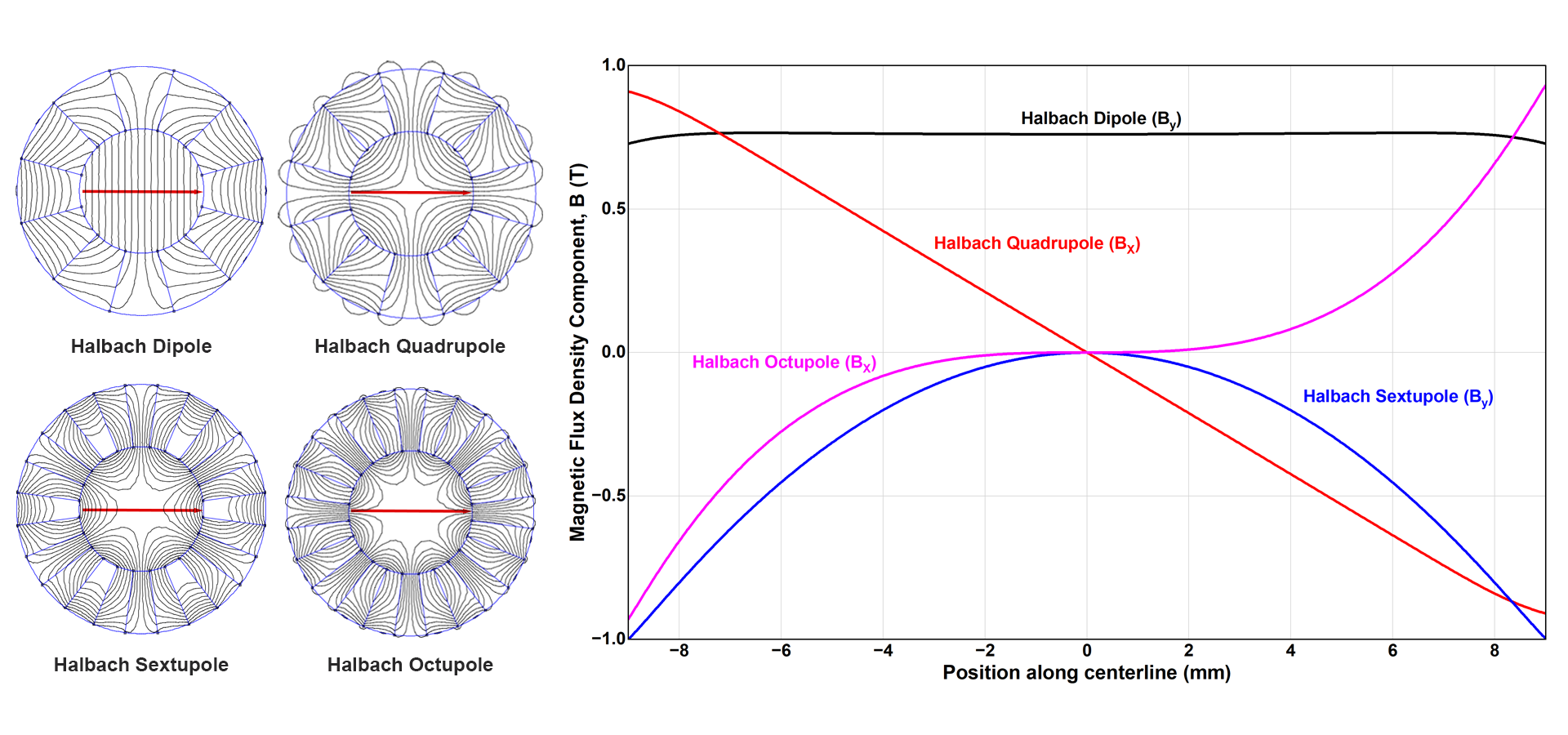
These differences show that increasing multipole order does not simply increase magnetic field strength or magnetic field gradient. Instead, each multipole order creates a different relationship between magnetic field and position, allowing the field distribution to be shaped for different spatial requirements.
Multipole Order, Pole Count, and Segment Count
Multipole order, pole count, and segment count describe different aspects of Halbach multipoles and should not be treated as interchangeable terms.
Multipole order defines the spatial order of the magnetic field. Dipoles are first-order multipoles, quadrupoles are second-order, sextupoles are third-order, and octupoles are fourth-order. Pole count follows directly from the field type: dipoles have two poles, quadrupoles have four, sextupoles have six, and octupoles have eight.
Segment count describes how many individual permanent magnet pieces are used to approximate the required magnetization pattern. The same multipole field can therefore be produced using different numbers of segments. For example, Halbach quadrupoles may be constructed from 8, 12, 16, or more segments while still producing quadrupolar field distributions.
Increasing segment count generally allows the practical magnetization pattern to approximate the ideal continuous distribution more closely. Segment count therefore affects field quality and construction complexity, but it does not determine the multipole order itself.
From Ideal Multipole Fields to Practical Halbach Assemblies
Ideal Halbach multipoles assume continuously varying magnetization directions around the cylindrical structure. Practical assemblies usually approximate this distribution using multiple permanent magnet segments with discrete magnetization directions.
The closer these segments reproduce the ideal magnetization pattern, the closer the resulting field approaches the theoretical multipole distribution. Segment count is therefore important, but it is only one part of field quality.
Magnetization angle accuracy, remanence variation between segments, segment positioning, and assembly tolerances can all introduce unwanted field components or higher-order harmonics. These effects become increasingly important when the required field distribution must remain precise across a defined working region.
For precision Halbach multipoles, magnetic measurement and field verification may therefore be needed after assembly. Depending on the application, additional adjustment or shimming can be used to reduce field errors and improve agreement with the intended multipole distribution.
Where Different Halbach Multipoles Are Used?
Different Halbach multipoles are selected according to the spatial field distribution required by the application rather than simply by magnetic field strength.
Halbach dipoles are used where approximately homogeneous magnetic fields are needed within a defined region. Typical examples include compact magnetic resonance systems, laboratory field sources, and other applications that benefit from relatively uniform internal fields.
Halbach quadrupoles are used where controlled magnetic field gradients are required. Their approximately linear field variation makes them suitable for beam focusing, magnetic manipulation, and other systems where field strength must change predictably with position.
Sextupoles, octupoles, and higher-order Halbach multipoles are used for more specialized field shaping. These configurations introduce nonlinear spatial variations and are therefore more common in beam control, field correction, and other applications requiring higher-order magnetic field components.
The choice of multipole order therefore begins with the required field distribution: homogeneous fields, homogeneous gradients, or higher-order spatial variations.