Compression molded magnets are available in a range of grades with different magnetic characteristics. In practical applications, their magnetic performance is mainly influenced by powder loading, density, and the selected magnetic powder system.
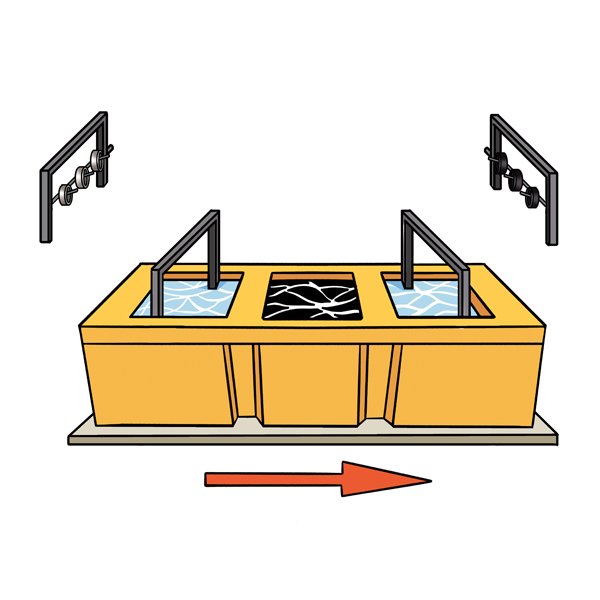
Compression molded magnets usually require surface treatment to improve their resistance to humidity and environmental exposure. Although the corrosion resistance of isotropic melt-spun NdFeB powder is better than that of sintered Neodymium magnets, compression molded magnets still have relatively higher porosity and a certain proportion of fine powder. For this reason, electrophoresis epoxy coating and spray epoxy coating are commonly used to provide surface protection. Other coatings and coating methods are also available for special requirements.
Compression molded magnets need to be magnetized before they can be used in their final applications. In many cases, compression molded NdFeB magnets are based on isotropic powder, which allows greater flexibility in magnetization direction according to the needs of the final design.
In practical applications, the achievable magnetization pattern still depends on factors such as magnet shape, dimensional limitations, and magnetizing fixture design. For this reason, magnetization direction should be considered together with shape and assembly requirements during product development.
Choosing the right compression molded magnet depends on several factors, including the required magnetic performance, shape regularity, wall thickness, dimensional requirements, corrosion environment, and cost target. In many cases, compression molded magnets are worth considering when the application needs better magnetic properties than injection molded magnets, but does not require the full performance or geometry route of sintered magnets.
They are especially suitable for regular shapes, thin-walled rings, and designs where isotropic magnetization flexibility is useful. Surface treatment and environmental conditions should also be considered carefully during selection.
If you need help determining whether compression molded magnets are more suitable than injection molded or sintered magnets for your project, feel free to contact us for technical support and product recommendations.