What Are Magnetization Directions?
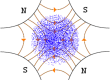
Magnetization directions describe how finished magnets are magnetized and where their magnetic poles are formed. They determine which surfaces or areas become the main working faces, how the magnetic field is distributed, and how magnets should be assembled in final products.
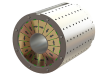
For standard magnet shapes, some magnetization directions are more common than others, but the direction should not be assumed only from the shape. Disc magnets and block magnets are commonly magnetized through their thickness. Cylinder magnets are often axially magnetized or diametrically magnetized. Ring magnets may be axially, diametrically, radially, or multipole magnetized depending on the required magnetic field. Motor arc magnets are usually magnetized in the radial direction between the inner and outer arc surfaces, while special curved designs should be reviewed according to the actual pole requirement.

This is why magnetization direction is a basic specification, not just a drawing detail. The same magnet material, grade, coating, and dimensions can produce different magnetic behavior when the magnetization direction changes. For custom magnets, a clear magnetization direction helps avoid misunderstanding between design, production, magnetization, and final inspection.
For anisotropic magnets, the magnetization direction also needs to match the orientation direction formed during manufacturing. For isotropic magnets, the magnetization direction can be more flexible, but it still needs to be confirmed according to the application and magnetizing fixture. In both cases, magnetization direction should be clear before magnets are produced and tested.
Magnetization Direction vs. Orientation Direction
Magnetization direction and orientation direction are related, but they are not the same specification.
Orientation direction is formed during magnet manufacturing. It refers to the preferred direction inside anisotropic magnets, allowing the magnets to achieve better magnetic performance when they are magnetized along this direction.
Magnetization direction describes how finished magnets are magnetized and where the north and south poles are formed. For anisotropic magnets, the magnetization direction should normally follow the orientation direction. For isotropic magnets, there is no fixed orientation direction, so the magnetization direction is mainly determined by magnet shape, magnetizing fixture, and application requirements.
Because of this difference, magnetization direction should be confirmed differently for different materials. Anisotropic magnets need consistency between orientation direction and magnetization direction, while isotropic magnets need clear pole position, working surface, and magnetizing pattern before production.
Common Magnetization Directions of Permanent Magnets
Permanent magnets can be magnetized in different directions depending on their material type, shape, orientation direction, magnetizing fixture, and final application. Some magnetization directions are very common for standard magnets, while others require special tooling, process review, or customized inspection.
The following are the most common magnetization directions used for permanent magnets:
| Magnetization Direction | Description | Commonly Used For | Notes |
| Axial / Through-Thickness Magnetization | Magnetic poles are formed on two opposite faces along the height, axial, or thickness direction. | Disc magnets, cylinder magnets, ring magnets, block magnets, plate magnets | One of the most common magnetization directions for standard magnets. |
| Diametrical Magnetization | Magnetic poles are formed across the diameter or curved profile. | Cylinder magnets, ring magnets, sphere magnets, some arc magnets | Common in sensors, small motors, and rotating magnetic applications. |
| Radial Magnetization | Magnetic poles are formed along the radial direction, usually between inner and outer surfaces. | Ring magnets | Often used in motor structures and ring-shaped magnetic systems. |
| Multipole Magnetization | Multiple north and south poles are formed on one surface or around a circumference. | Ring magnets, disc magnets, magnetic strips, encoder magnets | Pole number, pole pitch, and pole layout must be confirmed. |
| Skewed Magnetization | The pole pattern is designed with an angular offset along the axial direction. | Multipole ring magnets | Usually used to reduce torque ripple, cogging torque, or noise in motor applications. |
| Custom Magnetization | The pole pattern is designed according to a specific magnetic field requirement. | Sensor magnets, magnetic assemblies, special magnetic components | Requires early review of feasibility, tooling, and inspection method. |
These terms describe the direction or pattern of magnetization, not only the magnet shape. The same magnet shape may have different magnetization directions depending on the material, orientation direction, pole requirement, and final application. For example, ring magnets may be axially magnetized, diametrically magnetized, radially magnetized, or multipole magnetized. Cylinder magnets may be axially or diametrically magnetized. Arc magnets are commonly magnetized in the radial direction for motor applications, while some curved or specially designed magnets may require diametrical or customized magnetization.
For this reason, magnetization direction should be treated as part of the magnet specification. When the required pole position or working surface is not clear, the same magnet drawing may lead to different production interpretations.
Magnetization Direction by Magnet Shape
Magnet shape is often the first clue when reviewing magnetization direction, but it should not be the only basis for confirmation. The same shape may support different magnetization directions, while material type, orientation direction, magnetizing fixture, and application requirements may limit what is practical.
Disc magnets are commonly axially magnetized, with the north and south poles on the two flat circular faces. For special designs, disc magnets may also be diametrically magnetized or surface multipole magnetized.

Axial Magnetization

Axial Multipole Magnetization

Diametrical Magnetization
Cylinder magnets are commonly axially magnetized or diametrically magnetized. Axially magnetized cylinder magnets have poles on the two end faces, while diametrically magnetized cylinder magnets have poles across the curved side surface.

Axial Magnetization

Diametrical Magnetization
Ring magnets can be designed with several magnetization directions and pole patterns, including axial magnetization, axial multipole magnetization, diametrical magnetization, diametrical multipole magnetization, skewed magnetization, and radial magnetization. The correct choice depends on where the working magnetic field is needed: on the two flat faces, as a multipole pattern on an end face, across the diameter, around the circumference, between the inner and outer surfaces, or with an angular offset along the ring height.

Axial Magnetization

Axial Multipole Magnetization

Diametrical Magnetization

Diametrical Multipole Magnetization

Skewed Magnetization

Radial Magnetization
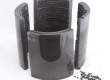
Arc magnets are commonly used in motor applications and are usually magnetized through the arc thickness, with magnetic poles formed on the inner and outer curved surfaces. Depending on magnet geometry and drawing convention, this may be described as parallel magnetization. For special curved designs, the pole direction and assembly position should be confirmed before production.

Diametrical Magnetization

Radial Magnetization

Chord Magnetization

Axial Magnetization

Chord Magnetization
Block magnets and plate magnets are usually magnetized through thickness, length, or width. The magnetization direction should be clearly marked when the working surface is not obvious from the drawing.

Axial Magnetization

Axial Multipole Magnetization

Longitudinal Magnetization

Transverse Magnetization
Why Magnetization Direction Must Be Confirmed Before Production?
Magnetization direction should be confirmed before production because it affects not only where the magnetic poles are formed, but also how the magnets can be manufactured, magnetized, assembled, and inspected. When the magnetization direction is unclear, the same dimensions and material grade may still lead to different magnetic results.
For standard magnets, the magnetization direction is usually defined by the product specification. For custom magnets, however, drawings may show only the shape, dimensions, coating, and tolerance, without clearly showing where the north and south poles should be located. This can create misunderstanding, especially for ring magnets, arc magnets, block magnets, and magnets used in assemblies.
For isotropic magnets, the magnetization direction is more flexible because there is no fixed orientation direction inside the material. However, the required pole position, magnetized surface, pole pattern, and magnetizing fixture still need to be clear before production.
For anisotropic magnets, magnetization direction is more closely connected with the orientation direction formed during manufacturing. The magnets should normally be magnetized along their orientation direction to achieve the expected magnetic output. If the orientation direction and magnetization direction are not consistent, the final magnetic performance may be much lower than expected, or the design may not be practical for production.
This is especially important for magnets with non-standard pole layouts, such as radial ring magnets, multipole ring magnets, skewed magnetized rings, and customized sensor magnets. In these cases, magnetization direction is not just a final magnetizing step. It needs to be considered together with material selection, tooling feasibility, pole layout, and inspection method before production starts.
Magnetization Direction Symbols on Magnet Drawings
Magnetization direction is often marked on magnet drawings using arrows, N/S pole labels, or notes such as axial magnetization, diametrical magnetization, radial magnetization, or multipole magnetization. These symbols help manufacturers understand where the magnetic poles should be formed and which surface should be treated as the working surface.
For simple magnets, an arrow may be enough to show the magnetization direction. For example, a disc magnet may use an arrow through the thickness direction, while a block magnet may use an arrow through thickness, length, or width. For diametrically magnetized cylinder magnets or ring magnets, the drawing should clearly show that the poles are formed across the diameter rather than on the end faces.
For ring magnets, arc magnets, and multipole magnets, drawing notes are usually more important. The drawing may need to show pole position, pole number, pole pitch, magnetized surface, and assembly direction. For multipole magnetization, a simple arrow is usually not enough because the magnetic pattern is defined by the pole layout rather than only one direction.
When the magnetization direction is not clearly marked, suppliers may need to confirm it before quotation or production. This is especially important for custom magnets, anisotropic magnets, motor magnets, sensor magnets, and magnetic assemblies where the magnetic poles must match the final structure.
How SDM Confirms Magnetization Direction for Custom Magnets?
For custom magnets, SDM confirms magnetization direction by reviewing the magnet drawing, material type, grade, shape, orientation direction, pole requirement, and final application. The goal is to make sure the required magnetic poles can be produced, magnetized, and inspected in a practical way.
In a typical review, SDM checks whether the magnetization direction matches the magnet shape and material characteristics. For anisotropic magnets, the magnetization direction should normally follow the orientation direction formed during manufacturing. For isotropic magnets, the direction can be more flexible, but the required pole position, working surface, and magnetizing pattern still need to be clear.
When special magnetization is required, SDM may also review the magnetizing fixture, pole layout, inspection method, and assembly direction. For multipole magnets or customized pole patterns, drawings, sketches, sample references, or magnetic field requirements can help reduce misunderstanding before production.
To confirm magnetization direction more efficiently, customers can provide the magnet drawing, material grade, working surface, assembly position, required pole direction, and any magnetic field or testing requirements. This helps SDM determine whether the requested magnetization direction is standard, feasible with special tooling, or needs further adjustment before production.