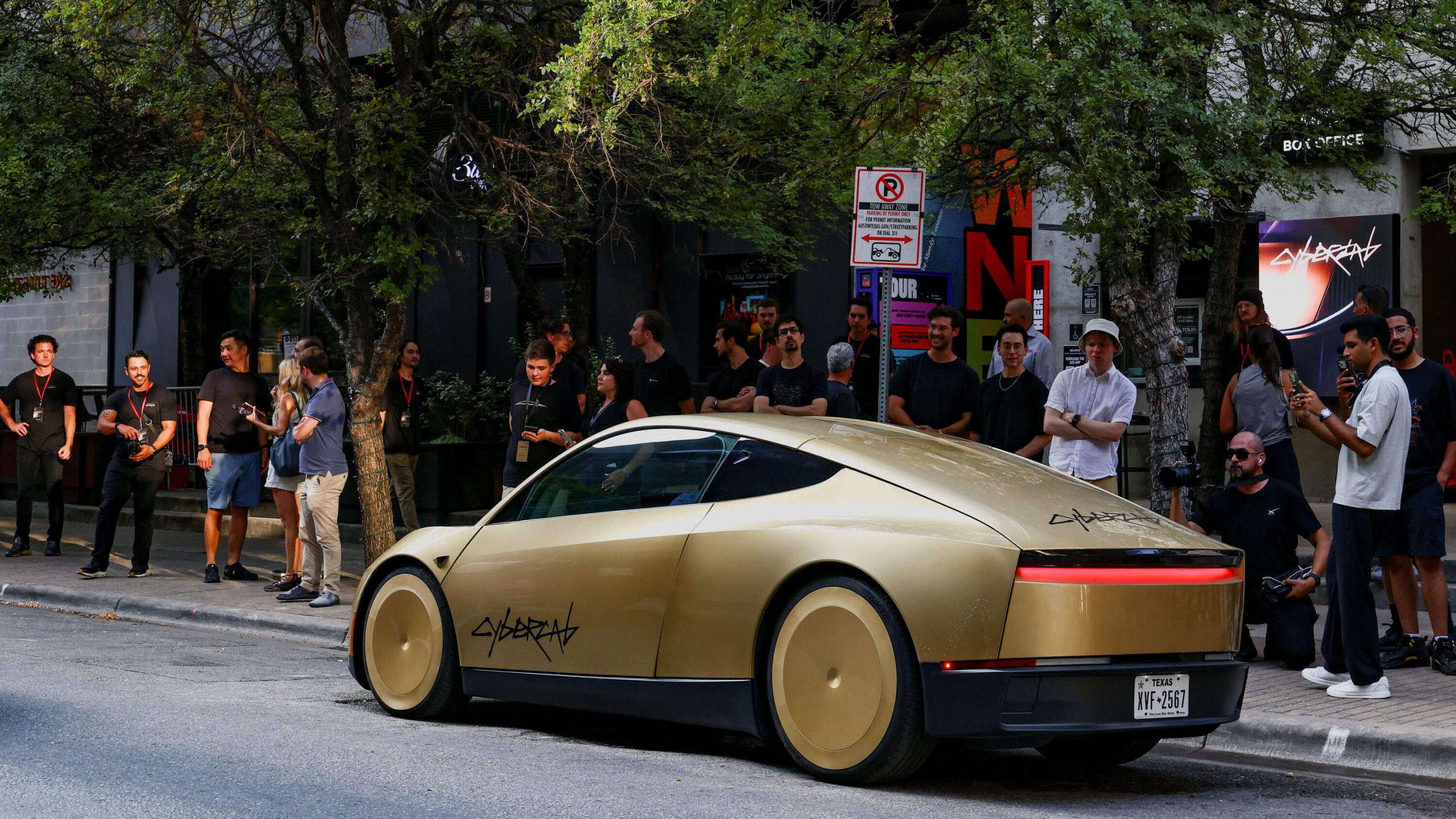
Tesla’s recent announcement that the Cybercab motors use no rare earth metals immediately raised an obvious question: did Tesla simply return to induction motors?
That would not be surprising. Induction motors do not require permanent magnets and can therefore reduce dependence on imported rare earth permanent magnet supplies. Tesla itself has extensive experience with induction traction motors, making this one of the first possibilities considered when the announcement appeared.
However, regulatory documents for the Cybercab identify its motors as AC three-phase permanent magnet motors. This makes the development more interesting: Tesla has not eliminated permanent magnets from the motors—it has eliminated rare earths from permanent magnet motors.
The distinction matters. Rare earth-free motors is a broad term covering motors that operate without rare earth materials, including technologies that do not use permanent magnets at all. Rare earth-free permanent magnet motors are a narrower category: they retain permanent magnets for rotor excitation but use magnet materials that do not depend on rare earth elements.
The engineering challenge is therefore no longer simply how to build motors without rare earth magnets. Induction motors and other magnet-free technologies have already demonstrated that this is possible. The more difficult question is how much of the efficiency, torque density, compact size, and other advantages of permanent magnet motors can be retained when rare earth permanent magnets are removed.
Why Permanent Magnet Motors Still Matter in EVsv?
Permanent magnet motors are widely used in electric vehicles because they can provide high torque density, high power density, and good efficiency within a compact motor size. Rare earth permanent magnets have been particularly important in these designs because of their strong magnetic performance.
This is why eliminating rare earths is not simply a matter of choosing another motor type or replacing Neodymium (NdFeB) magnets with a lower-cost material. If permanent magnet motors are retained, alternative magnets usually require changes in magnet volume, rotor structure, magnetic circuit design, or the way torque is produced.
The challenge is therefore not whether rare earth-free motors can work, but whether rare earth-free permanent magnet motors can retain enough of the performance advantages that made rare earth magnets attractive in the first place.
Rare Earth-Free Permanent Magnet Motors
Rare earth-free permanent magnet motors retain permanent magnets in the rotor but use magnetic materials that do not depend on rare earth elements. Ferrite magnets are the most established option, while iron nitride magnets have also been discussed as a possible alternative since Tesla first announced its rare earth-free motor strategy.
The main difficulty is magnetic performance. Ferrite magnets have much lower remanence and maximum energy product than Neodymium magnets, so a direct one-for-one replacement usually cannot provide the same air-gap flux or torque density.
As a result, rare earth-free permanent magnet motors often rely more heavily on rotor geometry and magnetic circuit design. Larger magnet volumes, flux-concentrating structures, reluctance torque, and different operating speeds can all be used to compensate for weaker magnet materials.
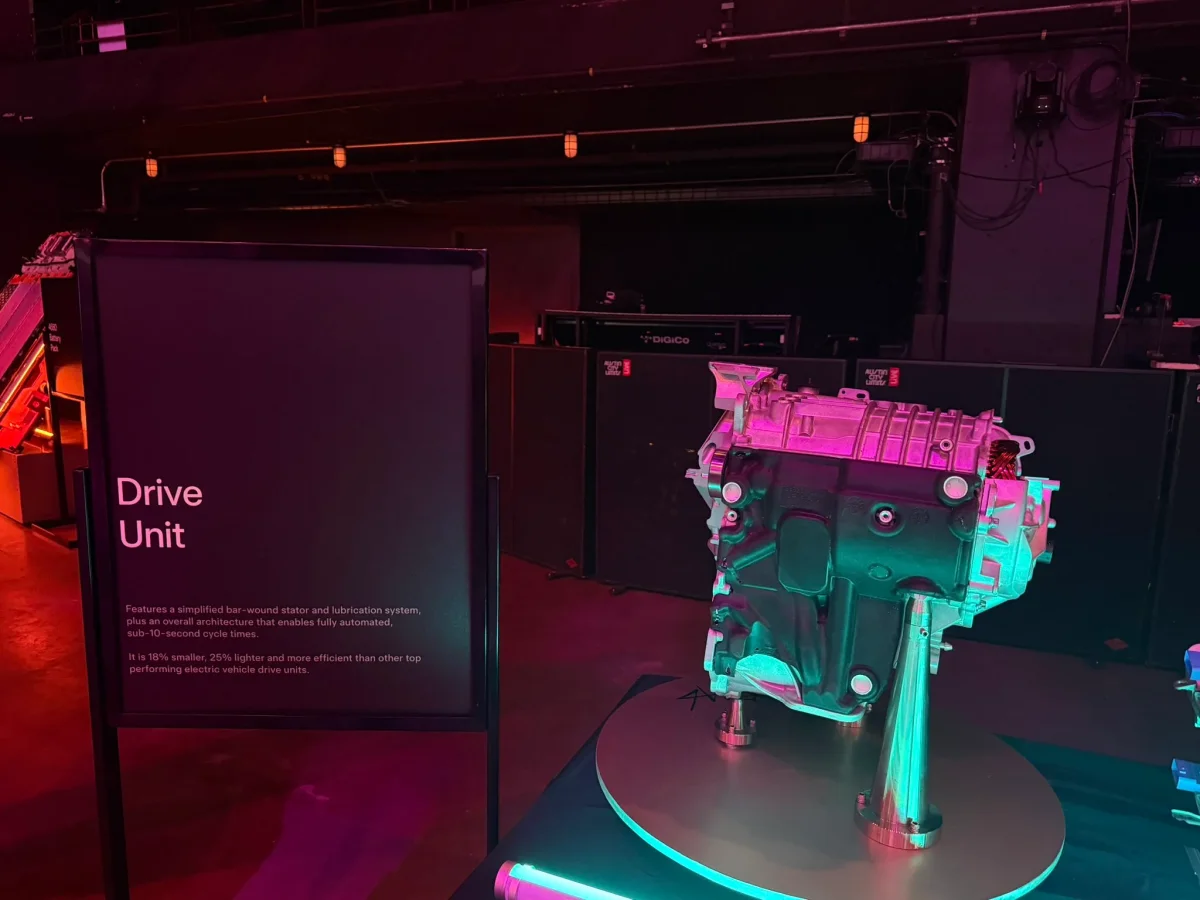
This is why rare earth-free permanent magnet motors should be viewed as a motor-and-magnet redesign rather than a simple magnet substitution.
Ferrite Magnets as the Most Practical Alternative
Ferrite magnets are the most mature rare earth-free permanent magnet material available for motor applications. They have a well-established manufacturing base, broad availability, relatively low material cost, and decades of use in electric motors.
Their value is therefore not based on matching the magnetic performance of Neodymium magnets. Instead, ferrite magnets become more attractive when motors are designed around their material characteristics from the beginning, allowing magnet volume, rotor geometry, and magnetic circuit design to be optimized together.
For this reason, ferrite magnets remain the most practical starting point for rare earth-free permanent magnet motors, even as newer magnetic materials continue to attract attention.
Iron Nitride Magnets and Other Emerging Alternatives
Iron nitride magnets have attracted attention as a possible rare earth-free magnet material, particularly since Tesla first announced its rare earth-free motor strategy.
The main difficulty in assessing this route is that its magnetic performance remains relatively opaque. Publicly available data are limited, and reported values are not always presented under comparable test conditions. Important parameters such as coercivity, temperature stability, energy product, and production consistency are therefore difficult to evaluate against established Neodymium and ferrite magnets.
Commercial production is also still at an early stage. For now, iron nitride is better treated as an emerging material worth watching rather than a proven option for rare earth-free traction motors.
What We Know About Tesla’s Rare Earth-Free Motors?
Tesla has confirmed that the Cybercab motors use no rare earth metals, while regulatory documents identify the propulsion system as using AC three-phase permanent magnet motors. This rules out the simplest explanation that Tesla achieved a rare earth-free design merely by returning to induction motors.
Tesla has not publicly disclosed the magnet material used in these motors, and the use of ferrite magnets remains unconfirmed.
This uncertainty is important. Without confirmed magnet material, rotor geometry, magnetic performance, and operating conditions, it is too early to use the Cybercab as evidence that any particular rare earth-free magnet technology has already matched Neodymium magnets in mainstream traction motors.
For now, the Cybercab is better viewed as evidence that rare earth-free permanent magnet motors can reach commercial vehicle applications—not as confirmation of which magnet material will become the dominant alternative.
Discuss Magnet Options for Motor Development
Rare earth-free motor development does not point to a simple replacement for Neodymium magnets. Different projects may involve ferrite magnets or conventional rare earth magnets, depending on the required motor performance and design constraints.
If you are evaluating permanent magnet materials, magnet geometries, or magnetic performance for motor development, contact SDM to discuss your project requirements.