Ι What Is Halbach Cylinder?
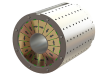
Halbach cylinder serves as the specialized Halbach array configuration specifically engineered for magnetic refrigeration applications. In the field of sustainable cooling research, Halbach cylinder has become a cornerstone experimental tool for investigating magnetic refrigeration. This permanent magnet assembly provides the intense and uniform magnetic field necessary to trigger the magnetocaloric effect (MCE) in solid-state refrigerants.
By employing a dual-layer coaxial configuration—frequently referred to as a dual-layer Halbach array—researchers can effectively simulate a complete refrigeration cycle through simple mechanical rotation. This practical design ensures high field precision while offering a self-shielding, energy-efficient solution for laboratory-scale testing and material characterization.

Principles and Cycle of Magnetic Refrigeration
Magnetic refrigeration is an environmentally friendly cooling technology based on the magnetocaloric effect (MCE), an intrinsic property of specific magnetic materials. This effect is characterized by a temperature change in the material when exposed to a varying external magnetic field.
The Active Magnetic Regenerative (AMR) Cycle
To achieve continuous cooling for laboratory or industrial use, the system undergoes a four-stage AMR cycle:
-
Magnetization (Adiabatic Heating): When the external magnetic field increases, the magnetic moments of the material align, reducing magnetic entropy and causing the temperature to rise.
-
Heat Rejection (Isofield Cooling): A transfer fluid carries the heat away from the magnetic material to the ambient environment.
-
Demagnetization (Adiabatic Cooling): As the magnetic field is removed, the magnetic moments return to a disordered state, absorbing internal energy and causing the material to cool significantly.
-
Heat Absorption (Isofield Heating): The chilled fluid absorbs heat from the target load, completing the cycle.
Efficient cooling depends on the magnetic system’s ability to switch rapidly and uniformly between these magnetization and demagnetization states.

Halbach Cylinder: Structure and Operating Principles
Halbach cylinder designed for magnetic refrigeration utilizes a dual-layer coaxial structure to achieve a rapidly switchable and highly uniform magnetic field. This assembly consists of an inner array and an outer array, both of which are engineered as independent Halbach arrays to ensure total control over the internal magnetic flux.
Inner and Outer Arrays
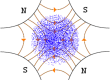
In this coaxial configuration, both the inner array and the outer array are magnetized following a specific Halbach pattern, typically oriented to produce a uniform dipole field (k=2) within the central bore. This dual-array architecture is the fundamental prerequisite for generating the variable magnetic profiles required for experimental magnetic cooling.
Magnetic Field Superposition and Cancellation
The functional core of the dual-layer Halbach array is based on the vector superposition of the magnetic fields generated by the two nested rings:
-
Constructive Superposition (Bmax): When the inner and outer rings are rotated so that their magnetic vectors are in phase (aligned), the fields from both rings add together. This results in the maximum magnetic induction (Bmax) required for the magnetization stage of the cycle.
-
Destructive Interference (Bmin ≈ 0): By rotating one ring 180° relative to the other, the magnetic vectors oppose each other. In this state, the magnetic fields within the central bore are effectively canceled, creating the near-zero field environment (Bmin ≈ 0) necessary for the demagnetization stage.
By utilizing mechanical rotation to switch between these states, the Halbach cylinder provides a high-efficiency solution that eliminates the thermal management issues and power requirements of traditional electromagnet systems.

Magnetic Field Superposition

Magnetic Field Cancellation
Advantages of Halbach Cylinder in Magnetic Refrigeration
Compared to superconducting magnets or traditional electromagnets, the dual-layer Halbach array offers distinct advantages for experimental and industrial refrigeration applications:
-
Static Magnetic Refrigerant: By rotating the inner and outer arrays rather than moving the expensive and fragile magnetocaloric materials, the system significantly simplifies sealing mechanisms and reduces mechanical wear.
-
High Field Strength and Homogeneity: These assemblies can generate high-uniformity magnetic fields exceeding 1.0T within the central air gap without the need for a heavy iron core. This precision is critical for ensuring that the magnetic refrigerant undergoes synchronous phase transitions.
-
Self-Shielding Properties: The Halbach array naturally concentrates the magnetic flux on one side (the interior). Consequently, the stray magnetic field outside the cylinder is extremely low, eliminating the need for bulky external shielding and facilitating system miniaturization.
-
High Energy Efficiency: The torque required to rotate the dual-layer arrays can be optimized through precision balancing (such as using multi-pole pair designs). This reduces the power consumption of the drive motor and improves the overall coefficient of performance (COP) of the cooling system.
Key Design Parameters for Halbach Cylinder
While analytical formulas for the Halbach cylinder are common in scientific literature, the true engineering challenge for magnetic refrigeration lies in the practical optimization of the physical assembly. At SDM, we focus on the subtle balance between segmentation, field quality, and system integration to provide the most effective experimental tools.
Segmentation and Field Homogeneity
The number of segments (N-sectors) used to construct the inner array and outer array is the primary driver of magnetic performance:
-
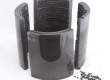
High-Precision Induction: Increasing the segmentation (e.g., from 8 to 12 or 16 segments) significantly enhances both field strength and homogeneity. This ensures that the magnetic refrigerant undergoes a uniform phase transition.
-
Extended “Flat Region”: Higher segmentation results in a longer plateau of the maximum magnetic field within the cylinder’s bore. This extended flat region allows for larger refrigerant beds or more stable measurements across the working area.
-
Performance-Cost Balance: In every project, there is an optimal point where the number of segments provides sufficient precision without unnecessary manufacturing costs. SDM assists customers in identifying this “sweet spot” based on their specific field requirements and budget.
Collaborative Engineering and Integration
A functional magnetic refrigeration setup requires the Halbach cylinder to work in perfect harmony with a broader electromechanical system.
-
Sizing and Field Optimization: Rather than providing a “one-size-fits-all” product, we collaborate with researchers to determine the ideal dimensions and magnetic field profiles for their unique experimental needs.
-
Electromechanical System Design: A dual-layer rotating system generates significant magnetic torque and requires precise synchronization. SDM is equipped to assist in the design of the control systems and mechanical interfaces required to manage the rotation of the inner and outer arrays.
-
System Integration Support: We provide engineering cooperation on the housing and drive mechanisms, ensuring the entire assembly remains stable and efficient throughout the active magnetic regenerative (AMR) cycle.