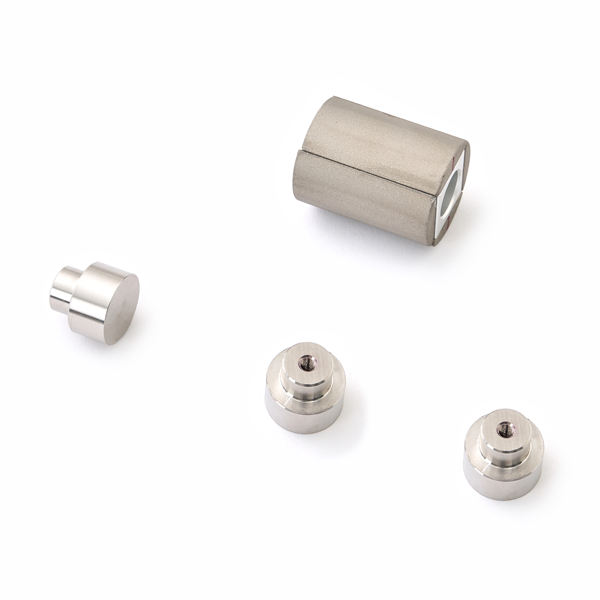
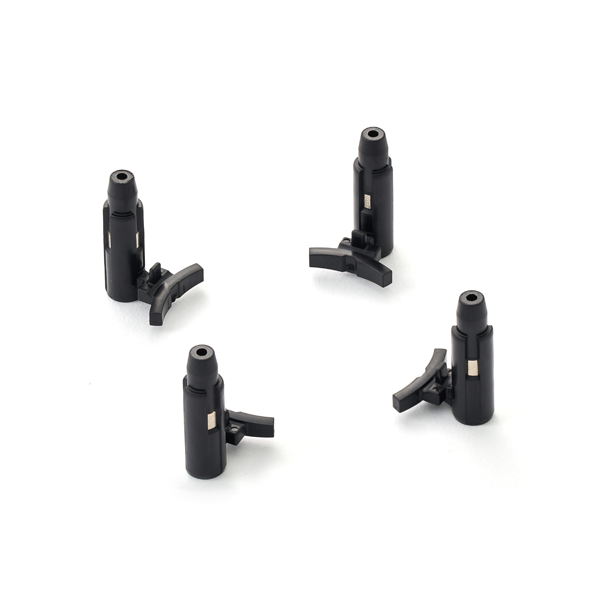
SmCo is widely used in magnet assemblies that need to operate reliably under harsh working conditions. Its combination of good temperature stability, corrosion resistance, and stable magnetic performance makes it a strong choice for assemblies used in high-speed, high-temperature, or chemically demanding environments. In these applications, the goal is not only to select the right magnet material, but to ensure that the complete assembly can maintain its function, fit, and magnetic output throughout service life.
As a result, SmCo magnet assemblies are often selected for products where temperature stability, corrosion resistance, and long-term reliability are critical.
Since 2025, export controls on Samarium-related items in China have made product classification and compliance review more important for products involving SmCo magnet materials. For buyers sourcing raw SmCo magnets, export licensing requirements and customs declaration details can affect procurement planning.
For SmCo magnet assemblies, however, the situation can be different depending on the level of integration and the final product structure. Official guidance published in 2025 indicates that certain deeply processed downstream components and assemblies are generally outside the scope of Announcement No. 18.
This is one reason why some customers are evaluating SmCo magnet assemblies not only from the perspective of magnetic performance and manufacturing efficiency, but also from the perspective of supply chain stability. At the same time, export classification should still be reviewed case by case.
For some projects, sourcing raw SmCo magnets remains a reasonable choice. This is often the case when the customer already has an established assembly process and can manage fitting, bonding, balancing, or final verification internally.
At the same time, not every project is best served by sourcing magnets alone. When the final product depends on closer coordination between magnets and shafts, housings, sleeves, carriers, or other structural parts, the assembly route may be more practical.
Compared with purchasing raw SmCo magnets as separate parts, finished SmCo magnet assemblies can help simplify supplier coordination and reduce the risk that dimensional or structural issues appear only after the parts are brought together.
This does not mean assemblies are always the better choice. For some buyers, raw SmCo magnets are still the right option. But where the project places more importance on integration, manufacturing coordination, and smoother execution from prototype to production, SmCo magnet assemblies may be the more realistic route.
Historically, many engineers sourced SmCo magnets from one supplier and shafts, sleeves, housings, or other structural parts from others, then completed the final assembly in-house or through a third party. While this approach is common, it can increase sourcing complexity, tolerance stack-up, and quality risk, especially when brittle SmCo magnets are involved.
At SDM, we support integrated manufacturing for SmCo magnet assemblies by coordinating both the magnets and the related precision components required for the finished product. Depending on the design, this may include laminations, sleeves, housings, engineering plastic parts, and other structural components, together with suitable assembly and verification methods for the application.
By managing these elements in a more integrated way, we help customers reduce supplier coordination, improve dimensional consistency, and move more efficiently from prototype to production. The result is a SmCo magnet assembly that is better aligned with the requirements of the final product.
In SmCo magnet assembly projects, design support is often important because performance depends not only on the magnet material itself, but also on how the magnetic and mechanical parts are combined in the final structure.
At the design stage, factors such as magnet grade, shape, magnetization direction, operating temperature, corrosion exposure, dimensional tolerance, and joining method often need to be considered together. A design that appears workable from the magnet side alone may still become difficult once shaft fit, sleeve thickness, bonding clearance, or assembly sequence are brought into the discussion.
For this reason, it is often helpful to review the magnet form, assembly structure, key dimensions, and basic manufacturability at an early stage, so that avoidable risks can be reduced before tooling or batch production moves forward.
For projects that require closer coordination, this kind of support can also help improve the transition from prototype development to final production. The purpose is not only to supply SmCo magnet assemblies, but also to make the assembly route more practical and easier to implement.
Our SmCo magnet assembly capabilities cover a range of product structures for motors, magnetic transmission, and sensing applications. The following types represent several typical assembly solutions developed for different end-product requirements.
SDM can support selected custom SmCo magnet assemblies based on customer drawings and assembly requirements. Depending on the project, this may include magnet production, related precision components, assembly work, and prototype support.
For projects that require closer coordination, earlier communication can help define a clearer support path in terms of delivery scope, sample preparation, and related project details. If you have drawings or existing assembly requirements, feel free to share them with us for review.