What Are Motor Magnets?
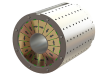
Motor magnets are permanent magnets used in permanent magnet (PM) motors to provide the magnetic field required for torque generation. Depending on the motor design, they may be mounted on or inside the rotor, used in the stator, or integrated into more complex magnetic assemblies.
Unlike general-purpose magnets, motor magnets need to be considered as part of the complete magnetic circuit. Their performance depends not only on material grade or magnetic strength, but also on magnet geometry, magnetization direction, pole coverage, air gap, operating temperature, and the surrounding motor structure.
For this reason, selecting motor magnets is not simply a matter of choosing the strongest available grade. The more important question is how the magnets will perform after they are integrated into the actual motor design.

Common Types of Motor Magnets
Motor magnets are available in different shapes, materials, and magnetization patterns depending on the motor structure and magnetic circuit. They may be supplied as individual magnet components or integrated into more complete rotor or stator assemblies.
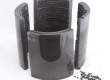
Arc and segment magnets are widely used around cylindrical rotors and stators, while block magnets are common where a simpler magnet geometry can be accommodated. Ring magnets can provide a more integrated structure, particularly when diametrical or multipole magnetization is required.
Material selection varies with magnetic output, operating temperature, demagnetization resistance, available space, and cost. Neodymium (NdFeB) magnets are widely used where high magnetic performance and compact size are important, while ferrite magnets remain common in cost-sensitive motor designs. Samarium Cobalt (SmCo) magnets may be considered where higher operating temperatures or greater magnetic stability are required.
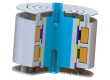
Some motor designs also use laminated magnets to reduce eddy current loss, while higher-level projects may require complete motor magnet assemblies or rotor assemblies rather than individual magnets. In these cases, magnet design must be considered together with bonding, mechanical retention, dimensional control, and the surrounding rotor structure.


From Magnets to Motors: How Magnet Design Affects Motor Performance?
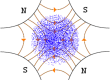
Moving from magnets to motors means converting the magnetic properties of individual magnets into useful magnetic flux within the complete motor. The magnets provide the excitation field, but their effect on motor performance depends on how that field interacts with the air gap, back iron, stator windings, and the overall magnetic circuit.
A higher-remanence magnet can increase the available magnetic flux, but stronger magnets do not automatically produce a better motor. Magnet thickness, pole coverage, magnetization pattern, air-gap length, and the surrounding steel all affect how much of the magnetic flux is actually used. If the magnetic circuit is poorly matched, additional magnet material may produce only a limited improvement in motor performance.
Magnet design also affects the distribution of magnetic flux around the air gap. Changes in magnet geometry or magnetization can influence the fundamental air-gap field as well as its harmonic content, which may in turn affect torque density, torque ripple, cogging behavior, vibration, and acoustic noise. This is why two motors using magnets of the same material grade can still behave very differently.
Temperature and operating point add another layer. As motor temperature rises, the magnetic output of the magnets changes, while the risk of irreversible demagnetization may also increase under unfavorable operating conditions. A practical motor magnet design therefore needs to provide sufficient magnetic performance together with an appropriate demagnetization margin over the expected operating range.
In this sense, magnets to motors is not simply a transition from a magnetic material to a finished product. It is the process of translating magnet properties, geometry, magnetization, and integration into usable motor-level performance.
Key Design Factors for Motor Magnets
Motor magnet design should be based on the actual motor structure, magnetic circuit, and operating conditions. In practice, the following factors usually need to be reviewed together rather than separately.
Magnet Shape and Dimensions
Magnet length, width, thickness, pole coverage, and dimensional tolerances should match the available rotor or stator space and the intended magnetic circuit. Changes in magnet thickness or pole coverage can affect the working point and air-gap flux, while overly difficult dimensions or unnecessarily tight tolerances may create additional manufacturing and assembly risks.
Magnetization Direction
The required magnetization pattern should be defined together with the motor structure and field distribution. Axial, radial, diametrical, multipole, or skewed magnetization may require different manufacturing routes and magnetizing fixtures, so magnetization feasibility should be reviewed before the magnet design is finalized.
Air Gap and Magnetic Output
Surface magnetic field alone is not enough to judge motor performance. The more relevant value is the useful magnetic field across the working air gap, which is affected by magnet dimensions, pole coverage, air-gap length, and the surrounding magnetic circuit.
Operating Temperature and Demagnetization Margin
Magnet grade should be selected according to the expected operating temperature and opposing magnetic field, rather than room-temperature remanence alone. In demanding motor designs, sufficient coercivity and demagnetization margin may be more important than simply maximizing magnetic output.
Coating and Assembly Requirements
Coating thickness, surface condition, bonding area, assembly clearance, and retention method should be considered together. A motor magnet may meet its magnetic specification but still create production problems if the coating, tolerances, or assembly method are not compatible with the surrounding structure.
High-Speed Motor Magnets and Rotor Reliability
High-speed motors place additional demands on motor magnets because magnetic performance is no longer the only concern. As rotational speed increases, centrifugal force rises rapidly, making magnet retention, dimensional consistency, bonding quality, and rotor balance increasingly important.
For surface-mounted designs, magnets may require additional mechanical retention through metal sleeves, carbon fiber sleeves, retaining rings, or other rotor structures. Adhesive bonding alone may not be sufficient for demanding speed ranges, particularly when the rotor is also exposed to thermal cycling or repeated acceleration and deceleration.
Magnet segmentation can also become important in high-speed motors. Dividing larger magnets into smaller segments may help reduce eddy current losses and local heating, while also making some rotor geometries easier to manufacture and assemble. However, segmentation introduces additional bonding gaps, tolerances, and assembly steps that need to be controlled.
High-speed motor magnets therefore need to be evaluated together with the rotor structure rather than as isolated components. Magnet grade, geometry, temperature resistance, bonding, mechanical retention, sleeve design, and dynamic balancing all contribute to rotor reliability at operating speed.
Custom Motor Magnets and Assemblies
Motor magnet projects often involve more than selecting a material grade and magnet size. The final design may also depend on magnetization, operating temperature, dimensional tolerances, coating, bonding, mechanical retention, and the surrounding rotor or stator structure.
SDM supports custom motor magnets as well as higher-level magnetic assemblies for different motor designs. Depending on the project stage, we can review existing drawings and specifications or discuss magnet options based on the available installation space, operating conditions, and performance requirements.
For project review, you can share the available motor or rotor drawings, magnet dimensions, material grade, magnetization direction, operating temperature, speed range, coating requirements, destination, and expected demand. For projects involving export-sensitive magnet materials or assemblies, material composition, end use, and destination may also need to be reviewed before production and shipment planning.
If some of these details have not yet been finalized, we can also begin with the existing motor structure and known design constraints.
Contact us to discuss custom motor magnets and magnetic assemblies for your application.