Ι What Are MagSafe Magnets?
The story of MagSafe magnets officially began in late 2020 when Apple Inc. launched the new iPhone 12 series. For many long-time Apple users, the name was a familiar echo of the past. Originally, MagSafe was a brand of breakaway magnetic charging cables for the MacBook, designed to safely disconnect if someone tripped over the wire. By reviving and reimagining this brand for the iPhone, Apple transformed a beloved safety feature into a sophisticated, integrated charging and accessory ecosystem.
At its core, the modern MagSafe system is designed to solve the single biggest headache of wireless charging: misalignment. Before MagSafe, placing a phone on a Qi-compatible pad was often a guessing game. If the phone was off-center by even a few millimeters, charging efficiency plummeted, or the device would simply heat up without gaining any power.

MagSafe was engineered to fix this by using a magnetic array that ensures the charging coils in the phone and the charger align perfectly every single time. This precise alignment is the key to achieving a stable and efficient 15W wireless charging experience.
This debut went far beyond just power. The first wave of MagSafe-integrated accessories—ranging from the iconic Leather Wallet to precision-engineered Silicone and Clear cases—demonstrated the versatility of the system. By embedding these magnets directly into the phone’s architecture, Apple essentially created a standardized mechanical interface. This move laid the groundwork for a vast ecosystem of compatible hardware, all built around a single, unified magnetic standard for effortless integration.
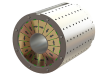
MagSafe magnets are far more than a simple ring of magnets. Instead of being a single, solid magnet, the system consists of dozens of individual, high-performance Neodymium (NdFeB) segments. These segments are meticulously arranged in a specific pattern to create a precise and reliable magnetic interface. This engineered configuration ensures a powerful connection with compatible hardware while protecting the integrity of the phone’s internal components.
The "Impossible" Challenge: A Triumph of Manufacturing
When the design requirements for the internal MagSafe magnetic array first circulated within the industry, the initial reaction from many seasoned engineers was one of deep skepticism. The challenge was unprecedented: Apple required a magnetic array that was incredibly thin to fit within the sleek, crowded profile of the iPhone, yet powerful enough to ensure a secure connection through the device’s rear glass.
The primary obstacle was the physical nature of the material. Neodymium magnets are essentially a ceramic; it is immensely powerful but notoriously brittle. In the early stages of development, mass-producing these multi-segmented, ultra-thin rings was considered by many to be a “mission impossible.” Traditional machining and grinding processes were often too aggressive—the slightest vibration or pressure could cause the delicate magnetic segments to shatter like glass.

However, the difficulty extended far beyond material physics. It was a multifaceted engineering puzzle that required managing complex manufacturing variables and maintaining extreme precision across massive production lines. The intense magnetic forces involved made every step of the process a high-stakes operation, where even the smallest deviation could lead to failure.
The breakthrough didn’t come from a single laboratory discovery, but from a relentless series of incremental process improvements within China’s manufacturing hubs. Engineers had to reinvent slicing techniques and perfect coating technologies that added zero bulk to the final product. What was once dismissed as “unmanufacturable” eventually became a reality produced at a scale of hundreds of millions of units. This success was a demonstration of how the magnet industry overcame a complex array of technical and industrial hurdles to meet the demands of a new era in mobile technology.
The Ecosystem Battleground: Why the Pearl River Delta Won the Race
While the internal magnetic array of the iPhone set the standard, the real industrial war was fought over the third-party accessory ecosystem. The true impact of MagSafe magnets wasn’t just in the phone itself, but in the explosion of non-official products—the cases, chargers, and modular attachments that everyday consumers actually buy. This massive secondary market became the ultimate testing ground for China’s magnetic industry, and it was here that a clear geographic winner emerged.
The competition for the MagSafe magnets ecosystem highlights a fascinating divide between two of China’s greatest industrial hubs: the Yangtze River Delta (YRD) and the Pearl River Delta (PRD).
- The YRD: The Industrial Giant: Regions like Ningbo in the Yangtze River Delta are the traditional heavyweights of the magnet world. They excel in “big industry”—supplying massive quantities of magnets for automotive motors, wind turbines, and industrial machinery. These enterprises operate on long-term cycles and rigid specifications. However, the hyper-fast, trend-driven world of MagSafe magnets for mobile accessories proved to be a mismatch for their massive, slower-moving operational structures.

- The PRD: The Agile Ecosystem: In contrast, the Pearl River Delta—specifically the clusters around Shenzhen, Dongguan, and the legendary Huaqiangbei—thrives on speed and integration. In the PRD, the entire supply chain for MagSafe magnets is compressed into a “one-hour circle.” Magnet processors, adhesive experts, injection molding factories, and packaging designers all speak the same language of urgency.
In this ecosystem-driven race, the PRD had a decisive advantage. When a new trend involving MagSafe magnets emerged, factories in Shenzhen and Dongguan could prototype, refine, and mass-produce a solution within days, not months. This “Extreme Response Speed” allowed the PRD to capture the lion’s share of the global accessory market. It wasn’t just about who had the best MagSafe magnets; it was about who could integrate them into a finished product and hit the market first.
Is Your Discarded Phone Case a Tiny Rare Earth Mine?
First, it is important to understand why MagSafe magnets are essential in a phone case. Without them, the case acts as a barrier, weakening the magnetic pull to the point where accessories simply slide off. To maintain that “snap,” the case needs its own array to act as a magnetic bridge, relaying the force from the phone to the outside world.
But here is the irony: unlike the iPhone itself—which Apple works hard to recover through its sophisticated recycling programs—third-party accessories are the “fast fashion” of the tech world. Whether a clear case turns yellow or a new color becomes the season’s must-have, these accessories are replaced more often than almost any other tech component.
This leads to a fascinating industrial puzzle. While many innovative brands now offer “circular” programs to recycle the plastic and TPU of old cases, the conversation rarely extends to the MagSafe magnets embedded inside. Because these magnetic arrays are often glued or heat-pressed deep into the structure, separating them for recycling is a complex engineering challenge that the industry is only beginning to look at.

This creates a unique contrast. Apple has made significant strides, aiming for 100% recycled rare earth elements in its official MagSafe magnets, setting a high benchmark for the primary supply chain. However, in the vast secondary market, we are potentially overlooking a “micro-mine” of refined Neodymium. It’s a quiet gap in the ecosystem: while the industry works toward a recycled future for the phone’s interior, millions of functional MagSafe magnets in the accessory world are simply waiting for a more efficient way to be “rescued” and reused.