Electric submersible pumps, or ESPs, are powerful devices used to lift fluids from deep underground, playing a crucial role in oil and gas extraction. ESPs are installed directly within the well and operate by being fully submerged in the oil or other fluids they are designed to pump. This submersible design makes them highly effective at extracting large volumes of fluid from deep reservoirs, eliminating many of the limitations found in surface pumps. In the oil and gas industry, ESPs are essential for enhancing production from wells that require extra lift to bring fluids to the surface. They are capable of moving significant amounts of liquid under extreme pressure, making them ideal for boosting productivity in challenging environments. The submersible nature of ESPs means they can function efficiently at substantial depths, even when exposed to harsh conditions such as high temperatures and high pressures. This makes ESPs a reliable choice for oil producers looking to maintain continuous, high-performance extraction operations, maximizing the output from wells with minimal interruption.

How Electric Submersible Pumps (ESPs) Work?
Electric submersible pumps (ESPs) operate using a multi-stage centrifugal pump powered by an electric motor, both of which are fully submerged in the well. The electric motor drives the pump, causing it to spin at high speeds, which in turn generates centrifugal force to push the fluid upwards through stages of impellers and diffusers. The entire assembly, consisting of the motor, pump, and seal section, is submerged in the production fluid. The motor, located at the bottom, powers the pump by rotating a shaft connected to the impellers. The impellers transfer energy to the fluid by spinning rapidly, creating the lift needed to move fluid from deep reservoirs up to the surface. As fluid moves through each stage, it passes from an impeller to a diffuser, which converts the fluid’s velocity into pressure, allowing it to move progressively higher. Additionally, the seal section protects the motor from the well fluids and balances internal and external pressure, while sensors help monitor pump performance and system integrity. The multi-stage design of the centrifugal pump ensures ESPs generate sufficient pressure to lift fluids from considerable depths, making them highly efficient for handling large volumes, especially under challenging conditions.

Magnets in Electric Submersible Pumps

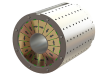
In terms of power density and compactness, PMMs are superior to IMs. PMMs provide greater torque in a smaller package, allowing ESPs to be deployed in narrow wellbores while still delivering high performance. The shorter motor length and lighter weight of PMMs make them easier to install and more efficient in terms of space utilization. Additionally, PMMs experience lower heat rise than equivalent induction motors. This reduced heat generation not only contributes to improved reliability but also extends the long operational life of the motor, which is vital for reducing maintenance and downtime in high-temperature downhole environments.
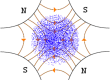
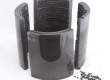
Magnets are at the core of the superior performance of permanent magnet motors (PMMs) in electric submersible pumps. For downhole applications, the choice is typically between Neodymium (NdFeB) magnets and Samarium Cobalt (SmCo) magnets. Neodymium magnets have a higher energy product, meaning greater magnetic strength, but their performance declines significantly at temperatures above 150 degrees Celsius. In contrast, SmCo is more stable under high-temperature conditions, making it the preferred choice for current PMMs used in ESPs. For environments where ambient well temperatures can reach 135 degrees Celsius or higher, SmCo provides the necessary thermal resistance, ensuring the motor’s magnetic strength remains consistent, which is crucial for efficient downhole operations.