What Is Magnetic Shielding?
Magnetic shielding is a method used to control the distribution of magnetic fields and reduce their influence on areas where magnetic interference is not desired. In permanent magnet systems, it is often used to limit stray magnetic fields, protect nearby sensitive components, or guide magnetic flux toward a preferred working area.
However, magnetic shielding does not usually mean completely “blocking” a magnetic field. Magnetic fields cannot be stopped in the same way that light can be blocked by an opaque wall. Instead, magnetic shielding typically works by using soft magnetic materials with high magnetic permeability to provide an easier path for magnetic flux. As a result, part of the magnetic field is redirected through the shielding material rather than passing through the protected space.

This is why magnetic shielding should be understood as a form of magnetic field control. The shielding effect depends not only on the material itself, but also on the magnet strength, distance, shield thickness, geometry, air gaps, and whether the shielding material becomes magnetically saturated.
For permanent magnet assemblies, magnetic shielding is especially important when the magnetic field must be concentrated in a specific working area while unwanted leakage fields need to be reduced. In these cases, shielding is often closely related to magnetic circuit design, rather than being a simple matter of placing a metal sheet around the magnet.
How Magnetic Shielding Works Around Permanent Magnets?
Permanent magnets produce a continuous magnetic field around themselves. The magnetic flux travels from one magnetic pole to the other, forming a magnetic circuit through the surrounding space. When there is no controlled magnetic path, part of this flux may spread into nearby areas and become a stray magnetic field.
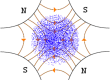
Magnetic shielding works by placing a suitable soft magnetic material near the magnet or around the area that needs protection. Because soft magnetic materials usually have much higher magnetic permeability than air, they can provide a lower-reluctance path for magnetic flux. As a result, part of the magnetic field is guided through the shielding material instead of spreading freely through the surrounding space.

Without Shielding
With Soft Magnetic Shield
This does not mean the magnetic field disappears. The field is redirected, concentrated, or partially contained by the shielding structure. In many permanent magnet assemblies, this principle is similar to the way a magnetic yoke, back plate, or pole piece is used to guide magnetic flux and improve the useful magnetic output in a specific area.
The actual shielding effect depends heavily on the magnetic circuit. A simple metal sheet may provide limited results if the material is too thin, the magnet is too strong, the distance is too small, or the shield geometry leaves large leakage paths. For this reason, magnetic shielding around permanent magnets should be treated as a design problem, not only as a material selection problem.
Magnetic Shielding Does Not Mean Magnetic Field Blocking
One common misunderstanding is that magnetic shielding can block magnetic fields completely. In reality, static magnetic fields from permanent magnets cannot simply be stopped like light passing through an opaque wall.
Most magnetic shielding works by redirecting magnetic flux, not by eliminating it. When a high-permeability material is placed near a magnet, magnetic flux tends to pass through that material more easily than through air. This can reduce the magnetic field in a protected area, but the flux still needs to return through a complete magnetic path.
In other words, asking “what material can block magnets?” is often less accurate than asking “what material can redirect magnetic flux?”
This is why many non-magnetic materials do not provide effective shielding against permanent magnets. Plastic, aluminum, copper, brass, and many types of austenitic stainless steel may physically cover a magnet, but they usually do not offer a low-reluctance path for static magnetic flux. As a result, they have little effect on the magnetic field from a permanent magnet.
Ferromagnetic materials such as low carbon steel, pure iron, Permalloy, and Mu-metal can be more effective because they interact strongly with magnetic fields. However, their shielding performance still depends on material permeability, saturation behavior, thickness, geometry, air gaps, and the distance from the magnet.
For this reason, magnetic shielding should not be viewed as a simple “magnetic field blocking” method. In most permanent magnet systems, it is better understood as a way to control, redirect, and manage magnetic flux.
Common Materials Used for Magnetic Shielding
Magnetic Shielding for Neodymium Magnets
Neodymium magnets are among the strongest permanent magnets available today. Their high magnetic output makes them useful in compact magnetic assemblies, but it also means that stray magnetic fields can become a design concern, especially when the magnets are placed near sensors, electronic components, moving mechanisms, or other magnetic materials.
Shielding Neodymium magnets is not always straightforward. Because their magnetic field can be very strong at short distances, the shielding material may become magnetically saturated if it is too thin, too small, or placed too close to the magnet. Once saturation occurs, the material can no longer guide additional magnetic flux effectively, and the shielding performance will drop significantly.
This is why high-permeability materials such as Mu-metal or Permalloy are not always the best solution for strong Neodymium magnets. These materials can be very effective in low-field shielding applications, but near powerful permanent magnets, they may saturate quickly if the shield design is not properly evaluated.
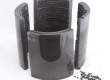
In many Neodymium magnet applications, low carbon steel or pure iron may provide a more practical shielding solution, especially when the goal is to reduce leakage fields, create a return path, or guide the magnetic flux toward a specific working area. A thicker steel part, magnetic yoke, back plate, or cup-shaped structure may sometimes perform better than a thin layer of high-permeability material.
However, there is no universal shielding material or structure that works for all Neodymium magnet designs. The final performance depends on magnet grade, magnet size, magnetization direction, working distance, shield thickness, shield geometry, air gaps, and the protected area. For demanding applications, magnetic simulation or prototype testing is often needed to confirm the actual shielding effect.
For this reason, magnetic shielding for Neodymium magnets should be considered as part of the complete magnetic assembly design. The question is not only which material can shield the magnet, but also how the magnetic flux should be guided, returned, or limited within the available space.
Design Factors That Affect Shielding Performance
Magnetic shielding performance depends on more than the material name. Even when a high-permeability material is selected, the final shielding effect can vary greatly depending on how the shield is designed, placed, and processed. In permanent magnet systems, the following factors are especially important.
Material Permeability
Magnetic permeability describes how easily a material allows magnetic flux to pass through it. In general, materials with higher permeability can provide a better path for magnetic flux than air, which helps redirect part of the magnetic field away from the protected area.
However, permeability is not a fixed value under all conditions. It changes with magnetic field strength, material condition, heat treatment, stress, and operating environment. For this reason, choosing a material with high permeability does not automatically guarantee effective shielding.
Magnetic Saturation
Saturation is one of the most important limits in magnetic shielding design. When too much magnetic flux passes through a shielding material, the material may reach its saturation point. After that, it cannot guide additional magnetic flux effectively.
This is especially important near strong Neodymium magnets. A thin high-permeability shield may work well in a weak magnetic field, but it may saturate quickly when placed too close to powerful permanent magnets. In such cases, a thicker steel part or a redesigned magnetic circuit may provide better practical results.
Shield Thickness and Cross-Sectional Area
The shield must have enough material volume and cross-sectional area to carry the magnetic flux. If the shielding part is too thin or too narrow, it may not provide a sufficient flux path, even if the material itself has good magnetic properties.
For strong magnets, increasing thickness or changing the shape of the shield can sometimes be more effective than simply switching to a higher-permeability alloy.
Shield Geometry
The shape of the shield has a major influence on the final result. A flat plate, U-shaped yoke, cup-shaped shield, sleeve, ring, or closed housing can produce very different shielding effects.
In general, structures that provide a more complete magnetic return path are usually more effective than open or poorly connected shapes. Open edges, sharp corners, large gaps, and discontinuous structures can all create leakage paths for magnetic flux.
Distance from the Magnets
The distance between the magnets and the shielding material also matters. Magnetic field strength changes rapidly with distance, so placing a shield very close to strong magnets can increase the risk of saturation.
In some designs, increasing the distance between the magnets and the shield, or adjusting the position of the protected area, can improve the shielding effect without changing the material.
Air Gaps and Assembly Tolerance
Air gaps have much lower permeability than soft magnetic materials. Even a small air gap can increase magnetic reluctance and reduce the effectiveness of the shielding structure.
For this reason, the contact condition, assembly tolerance, surface flatness, and mechanical fit of the shielding parts should be considered during design. A theoretically good shielding structure may perform poorly if the actual assembly leaves unexpected gaps.
Coverage Area and Leakage Path
Magnetic flux will always look for a return path. If the shield does not cover the right area, or if the design leaves large openings, the magnetic field may leak through edges, holes, or unprotected directions.
This is why shielding should be designed around the actual protected area and the expected leakage field direction, not just around the magnet itself.
Forming, Welding, and Heat Treatment
For high-permeability nickel-iron alloys such as Permalloy and Mu-metal, processing conditions can strongly affect magnetic performance. Bending, stamping, welding, machining, and mechanical stress may reduce permeability and weaken the shielding effect.
In demanding applications, proper annealing after forming may be necessary to restore the desired magnetic properties. This makes manufacturing process control an important part of magnetic shielding design.
Shielding Performance Should Be Evaluated as a System
In permanent magnet assemblies, shielding performance is the result of material properties, magnet strength, geometry, spacing, saturation behavior, and assembly quality working together. A shielding material cannot be evaluated alone without considering the complete magnetic circuit.
For applications with strict field limits or sensitive nearby components, magnetic simulation and prototype testing are often needed to verify the final result.
Magnetic Shielding vs. Magnetic Circuit Design
In many permanent magnet systems, magnetic shielding and magnetic circuit design are closely connected. Shielding is often understood as placing a material between a magnet and the area that needs protection, but the real design problem is usually more complex.
When a magnetic field needs to be reduced in one direction, concentrated in another direction, or kept away from nearby components, the complete magnetic path should be considered. A shielding plate, magnetic yoke, back plate, pole piece, cup structure, or soft magnetic housing may all influence how magnetic flux travels through the assembly.
For example, a steel back plate behind a magnet can reduce the magnetic field on the rear side while helping guide more flux toward the front working surface. A cup-shaped steel structure can help concentrate magnetic force in one direction. A pole piece can reshape the magnetic field distribution at the working area. In these cases, the same soft magnetic material may act as both a shielding part and a magnetic circuit component.
This is why magnetic shielding should not be treated only as a material selection question. In permanent magnet assemblies, the final effect depends on the relationship between the magnets, soft magnetic materials, air gaps, geometry, saturation behavior, and the intended working area.
Magnetic shielding is also not always necessary. If the leakage field does not affect nearby components, product function, assembly process, or user experience, adding shielding material may only increase cost, weight, and complexity. In many cases, adjusting the magnet arrangement, increasing distance, changing the working area, or improving the magnetic circuit may be more practical than adding a separate shield.
For this reason, magnetic shielding is often better understood as part of magnetic field control. The goal is not simply to cover the magnets, but to guide, return, or limit magnetic flux in a way that matches the function of the whole magnetic system.