What Is Magnetic Frag Rack?
Magnetic frag racks are removable aquarium racks designed to hold coral frags or frag plugs against the inside wall of a reef aquarium. Instead of relying on suction cups, hooks, or permanently fixed supports, these racks use magnetic attraction through the aquarium glass, allowing their position to be adjusted without modifying the tank.
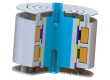
Frag rack magnets are typically arranged in opposing pairs, with one magnetic component integrated into the wet-side rack and another positioned on the dry side of the glass. The magnetic force passes through the nonmagnetic aquarium wall and clamps the two sides together. Larger racks may use two or more magnet pairs to provide sufficient holding force and improve stability across a wider structure.
This through-glass mounting method also makes magnetic frag racks easy to reposition. The rack can be moved vertically or horizontally as coral placement requirements change, while the magnetic components remain separated by the aquarium glass. From a magnetic design perspective, the actual working distance between the paired magnets depends on more than the aquarium glass alone, which becomes increasingly important as glass thickness and rack load increase.

How Frag Rack Magnets Work Through Aquarium Glass?
Magnetic frag racks normally use paired magnets positioned on opposite sides of the aquarium wall. Wet-side magnets are integrated into or sealed within the rack, while corresponding dry-side magnets remain outside the tank. Aquarium glass is nonmagnetic, so magnetic attraction can act through the wall and clamp both sides together without drilling, hooks, or permanent mounting.
This basic concept has long been used in magnetic aquarium glass cleaners. Early DIY frag racks sometimes reused magnetic cleaners as ready-made mounting systems, with coral racks attached to the wet-side component. Modern magnetic frag racks use the same through-glass principle but integrate the magnets directly into structures designed for holding coral frags.
Glass thickness is only part of the distance separating paired magnets. Plastic or acrylic housings, waterproof encapsulation, protective pads, recessed magnet pockets, and other structural features can all add to the effective magnetic gap. Designs that position magnets closer to the aquarium glass can therefore obtain stronger magnetic coupling from the same magnet size. This becomes especially important as aquarium glass becomes thicker.
Magnetic frag racks may use one or multiple magnet pairs depending on rack size and required holding performance. When several pairs are used, mounting points are generally distributed across the rack rather than concentrated in one location. Longer racks can use magnets at different positions to provide more even support, while magnet size, spacing, and available installation space can be considered together when determining the final arrangement.
Saltwater Protection for Frag Rack Magnets
Wet-side frag rack magnets remain continuously exposed to saltwater, so corrosion protection is especially important in this application. Neodymium magnets are sensitive to corrosion once moisture reaches the magnetic material, which means conventional surface plating should not be treated as the only long-term barrier in a reef aquarium.
For magnets used in reef aquariums, complete isolation from saltwater is therefore an important part of the design. Products described as reef safe magnets commonly place the magnetic component inside sealed plastic, acrylic, resin, or other nonmagnetic housings. Some designs use coated magnets inside the enclosure, while others rely mainly on complete encapsulation to keep saltwater away from the magnet.
Waterproof protection also affects magnetic performance. Every enclosure wall, sealing layer, or structural gap between the magnet and aquarium glass increases the distance between the paired magnets. Wet-side housings therefore need to provide reliable isolation without adding unnecessary thickness around the working face.
Dry-side magnets do not face the same continuous saltwater exposure, although housings or protective pads may still be used to protect the aquarium surface and the magnetic components. Separating wet-side and dry-side requirements can simplify the overall design while maintaining effective through-glass magnetic coupling.
DIY and Custom Magnetic Frag Racks
Magnetic frag racks are well suited to small-batch and custom production because the rack body can be made from acrylic, machined plastic, or 3D-printed materials without requiring complex tooling.
3D printing is particularly useful for adjusting rack size, frag plug hole layout, magnet pockets, and other structural details for different aquarium designs.
For DIY projects, suitable Neodymium magnets can be purchased separately and integrated into printed or machined housings. Magnet selection should consider aquarium glass thickness, available installation space, and the additional distance introduced by the housing.
Dry-side components are relatively straightforward, while wet-side magnets require much more careful sealing because long-term saltwater exposure cannot be treated in the same way as occasional contact with moisture.

This makes magnetic frag racks an accessible project for custom fabrication, but the magnet housing deserves as much attention as the rack itself. A well-designed enclosure should keep the wet-side magnets isolated from saltwater while avoiding unnecessary material thickness between the paired magnets.