Ι What Are Gun Magnets?
In the specialized field of magnetic assemblies, gun magnets—professionally known as magnetic gun holsters or gun mounting magnets—are essential storage solutions designed to mount weapons magnetically on nearly any surface, such as vehicle side panels, bedside tables, or inside safe boxes. These devices enable users to keep their firearms securely within reach while driving or sleeping, ensuring quick access during a crisis where every second counts.
Looking back at our legacy websites and older product catalogs, I clearly remember we always categorized gun magnets under our “magnetic tools” section. At the time, they were viewed as functional, high-performance gear—a tactical tool that bridged the gap between industrial magnetism and personal security. However, as I browse the current market, it’s hard to ignore a certain “cooling down” effect. The explosive energy that once surrounded this product category has matured into a quiet, almost stagnant stability. Writing this today feels less like a product update and more like a summary of a vibrant era in the magnet trade—a retrospective on a product that once defined the intersection of 2A culture and magnetic engineering.

The 2A Driver: Why Gun Magnets Became a Tactical Necessity
The core of the US market for these products is rooted deeply in the Second Amendment—the right to bear arms. For many supporters, the essence of this right isn’t just about ownership; it’s about the practical ability to defend oneself effectively. This is where gun mounting magnets transitioned from a niche hardware item to a tactical necessity. They provided a physical bridge between the legal right to carry and the tactical need for immediate availability.
During the pre-pandemic years, roughly between 2017 and 2019, the United States experienced a significant surge in security awareness. Whether driven by the frequent news of public safety incidents or a shifting political landscape, the focus on self-defense reached a fever pitch. In this specific timeframe, gun magnets became an overnight sensation because they offered a solution that felt both high-tech and incredibly intuitive to a public increasingly concerned with personal protection.

The popularity of these devices also stemmed from their ability to solve a critical “gap” in traditional firearm storage. While traditional holsters are excellent for carrying on one’s person, they can be clunky and slow when you are behind a steering wheel or asleep in bed. The market realized that tactical magnets could turn a vehicle’s dashboard, the side of a desk, or a nightstand into a tactical station. They allowed for a “hidden in plain sight” storage method that was far more accessible than a locked safe box.
Ultimately, during this peak era, gun magnets became a psychological anchor for many 2A practitioners. The “quick-draw” capability they provided wasn’t just a marketing gimmick—it was the physical embodiment of a lifestyle centered on readiness. In a time when “security” meant being prepared at a moment’s notice, the simple, reliable pull of a magnetic mount offered a unique kind of peace of mind that traditional storage simply couldn’t match.
The E-commerce Explosion: From Shopify to Magnetic Gun Holsters
While we have always maintained our own sales channels, this period marked the first time I truly grasped the staggering scale of the D2C (Direct-to-Consumer) market. It was a revelation to see our B2B customers moving such massive volumes of gun magnets specifically through independent, self-built Shopify stores. While the professional industry discussions on platforms like LinkedIn remained relatively quiet regarding this niche, the back-end data from these e-commerce sites told a completely different story of high-speed turnover and immense demand.
It was fascinating to watch how entrepreneurs rebranded a simple industrial component into a high-demand magnetic gun holster, reaching a level of viral success that rivaled even the “magnet fishing” craze of the same era. For us as manufacturers, this wasn’t just another order; it was a masterclass in how powerful a well-targeted independent site could be. Seeing our products transition from bulk shipments in a warehouse to thousands of individual homes across the US was a significant moment in understanding the true potential of the landing-page-driven sales model.
Debunking the N52 Myth: Pull Force vs. Practicality
In the magnet industry, N52 is widely marketed as the “gold standard”—frequently cited by suppliers and customers alike as the strongest grade available. For many, the logic is linear: if N35 is good, N52 must be superior. However, when it comes to gun magnets, this obsession with chasing the highest possible grade often ignores the most critical factor: The user experience.
The “Over-Magnetized” Traps
When gun mounts are designed by simply chasing high-grade magnets without considering the actual applications, they often result in “deadlock” effects.
While high pull forces might look impressive on spec sheets, excessive magnetism can make it difficult to draw firearms quickly and smoothly. In emergencies, any resistance or “stickiness” during the draw is a critical failure. Gun magnets’ primary purposes are to balance secure retention with predictable, effortless releases. Strengths without control are liabilities, not features.
Engineering the “Perfect Draw” via Magnetic Circuit Optimizations
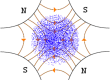
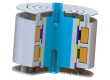
Instead of relying on expensive high-grade magnets to achieve raw pull forces, sophisticated manufacturers focus on magnetic circuit optimizations. By utilizing steel plates or U-shaped casings to channel magnetic fluxes directly toward contact surfaces, and employing multi-pole designs to create shallow but secure fields, producers can achieve superior holding powers using more stable, cost-effective lower-grade materials. Furthermore, optimizing plastic shells or outer rubber housings for surface frictions allows these mounts to provide secure grips without the “deadlock” risks of unoptimized higher-grade blocks, ultimately delivering smoother user experiences while significantly reducing production costs.
Why Design Has Stalled: The Mature Phase of Gun Mounting Magnets
The markets for magnetic firearm mounts have reached a design plateau. We are currently in a “mature phase” where genuine breakthroughs have been replaced by repetitive iterations. In reality, the industry has only seen two meaningful innovations in recent years:
-
Quickdraw Designs: Specialized mounts engineered to facilitate one-handed slide racking. By pressing the slides against the housings’ built-in stops, users can chamber rounds and achieve instant readiness in a single motion before drawing. This remains one of the few functional advancements that actually improved draw speeds in high-stress scenarios.
-
Aesthetic Personalizations: The shift toward visual customization, specifically laser-etched graphics or custom wraps featuring Gadsden flag motifs, Second Amendment themes, or patriotic branding. This addressed the users’ desire for personal expression and identity.
Beyond these two milestones, true innovation has effectively flatlined. This stagnation is exactly why so many suppliers have retreated into the “higher-grade” marketing trap. When producers run out of ways to improve the utility or ergonomics of their products, they default to shouting about “stronger magnets” to win over customers. This lack of fresh engineering has turned the sector into a pure price war between manufacturers, where the focus is no longer on making better products, but on cutting production costs to survive the competition.
Final Reflection: The Role of Chance in Product Success
Looking back on the rise of gun magnets, the market followed a path primarily driven by timing. When real-time RFQs and trade inquiries for these mounts first started surfacing on global sourcing platforms, many established industry players simply passed on the opportunity. They viewed these items as a minor niche, leaving the field wide open for anyone willing to move quickly.
A few smaller, scrappier outfits were the ones who paid attention. It wasn’t necessarily a grand business strategy; often, it was just the simple act of answering the call when a specific buyer reached out. By the time they moved into mass production and established a presence on wholesale marketplaces, they had already secured a massive first-mover advantage.
It is a classic case of survivor bias. While it is tempting to focus solely on engineering or foresight after the fact, much of the success came down to being in the right place at the right time. Getting that “first bite” of a genuine market sensation can completely pivot the trajectory of a small operation. In the end, while hard work is always the baseline, the fortune of catching a wave that others ignored is often what truly moves the needle.