What Are eVTOL Motor Rotors?
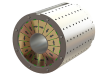
eVTOL motor rotors are the critical rotating components housed within the electric propulsion units of electric vertical take-off and landing (eVTOL) aircraft. Unlike standard industrial rotors, these components are engineered to convert electrical energy into high-torque mechanical power with exceptional efficiency.
By leveraging high-coercivity rare earth magnets within optimized magnetic circuits, these rotors achieve peak flux delivery while resisting the immense centrifugal stresses of high-RPM operation; maintaining this low-mass, compact form factor is fundamental to enhancing the aircraft’s overall power-to-weight ratio and extending operational endurance. As the primary electromagnetic driver for propulsion systems, eVTOL motor rotors facilitate the critical vertical lift and complex transition maneuvers required by next-generation air taxis and autonomous cargo drones.

Industry Landscape: The Rise of AAM
The emergence of advanced air mobility (AAM) is redefining the aerospace supply chain by shifting the focus toward fully electric and hybrid-electric propulsion. Unlike conventional aviation, which relies on centralized combustion engines, AAM platforms utilize distributed electric propulsion (DEP) architectures. By distributing thrust across multiple motor units positioned along the wings or fuselage, these aircraft achieve the redundancy and noise reduction required for urban and regional operations.
For the manufacturing sector, this technical shift necessitates a move toward compact, high-power-density motor designs. In a DEP system, the failure of a single propulsion unit must not compromise flight safety, making the precision and structural reliability of each individual motor rotor a paramount concern for aerospace engineers.

Critical Engineering Requirements for eVTOL Rotors
-
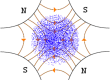
Optimized Flux-to-Mass Ratio: In electric aviation, every gram of weight directly impacts payload and range. Rotors must deliver maximum magnetic flux density while minimizing structural mass. Achieving this balance often involves advanced magnetic topologies—such as Halbach array configurations—which concentrate magnetic flux toward the air gap while reducing the requirement for heavy back iron, effectively lowering rotational inertia without sacrificing torque output.
-
Thermal Tolerance and Coercivity: Magnets for eVTOL motor rotors must possess high intrinsic coercivity to resist irreversible demagnetization when operating in these high-temperature environments, often exceeding 150°C. This thermal stability is critical during peak current loads encountered during vertical take-off and hovering maneuvers.
-
Structural Integrity at High RPM: With propulsion motors frequently operating between 10,000 and 30,000 RPM, eVTOL motor rotors are subjected to intense centrifugal stresses. Maintaining mechanical integrity requires extreme precision in magnet retention and dynamic balancing to mitigate vibration and prevent structural failure during flight.
Custom Manufacturing of eVTOL Motor Rotors
As a specialized manufacturer, we provide the technical infrastructure and precision assembly required to bring bespoke propulsion designs to life. Our approach to eVTOL motor rotors is centered on architectural flexibility, structural reliability, and alignment with specific aerospace development milestones:
-
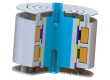
Support for Diverse Motor Topologies: Whether your propulsion system utilizes radial flux or axial flux architectures, we offer comprehensive manufacturing support for eVTOL rotors. We understand the distinct electromagnetic and mechanical requirements of each topology, ensuring that the magnet integration is optimized for the specific torque and cooling demands of your motor.
-
Fidelity in Design Realization: Our production processes for eVTOL motor rotors prioritize the exact placement and secure bonding of magnets within the rotor structure. We bridge the gap between complex engineering drawings and flight-ready components, ensuring that the physical assembly maintains the integrity of your electromagnetic design throughout the testing phase.
-
Optimized for R&D and Low-Volume Production: We are structured to support the iterative nature of the AAM industry. From initial R&D prototypes to low-volume pre-series production, our facility is optimized for the precision and repeatability standards required for aerospace certification and flight trials.